
Cocaine withdrawal can start within hours of your last dose if you’ve been using regularly. You’ll usually feel exhausted and low, sleep a lot, eat more than usual, and have strong cravings. Physically, it’s rarely as dangerous as alcohol or benzodiazepine withdrawal. Still, the depression and cravings can be intense, and they’re the main reason people go back to using. Below, we’ll cover what to expect and what actually helps.
Why Cocaine Withdrawal Happens
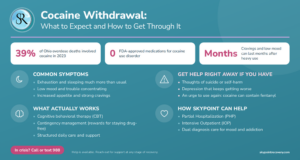
Cocaine causes dopamine, the chemical tied to reward and motivation, to build up in the brain. With repeated use, the brain adapts, and its reward system becomes less responsive to everyday pleasures. NIDA explains that the brain’s stress circuits also become more sensitive over time, so you feel worse than normal when you’re not using. When the cocaine stops, you’re left with a reward system that’s running low and a stress system that’s running high.
Common Cocaine Withdrawal Symptoms
Withdrawal most often hits people who have used a lot of cocaine and then cut down or stop, according to MedlinePlus. It often shows up as:
- Extreme tiredness and sleepiness
- Low mood, or losing pleasure in things you used to enjoy
- Feeling hungrier than usual
- Irritability and restlessness
- Strong cravings for cocaine
Physically, it’s usually less dangerous than withdrawal from alcohol. The bigger risks are emotional. The depression can be deep, and some people have suicidal thoughts during withdrawal.
When to get help right away
Call or text 988 if you or someone you love has thoughts of suicide or self-harm. Call 911 for any medical emergency. If your mood keeps sinking, take it seriously, even if it seems like “just the crash.”
How Long Does Cocaine Withdrawal Last?
In people who have used heavily, the crash can begin almost right away after they stop. From there, cravings and depression can last for months after long-term heavy use, though symptoms usually fade over time.
A helpful way to think about it:
| Phase | What it can feel like |
| The crash | Exhaustion, sleepiness, hunger, low mood, and strong cravings soon after heavy use stops. |
| The following weeks | Low mood, anxiety, sleep problems, and cravings can hang on. |
| The months after | Cravings and depression can linger, and stress or reminders of using can set off cravings. |
The longest-lasting cravings and low mood tend to follow long-term heavy use, and that long tail is why support after the crash matters as much as getting through it.
Why the Ohio Numbers Make This Urgent
In 2023, cocaine was involved in 1,738 unintentional overdose deaths in Ohio, 39% of the state’s total and a 7% increase from 2022, according to the Ohio Department of Health’s 2023 overdose report.
Much of that risk comes from what’s in the supply. Cocaine is sometimes mixed with fentanyl, and that contamination is a major driver of overdose deaths. If you don’t regularly use opioids, your tolerance to them is low, so one relapse during a hard stretch of withdrawal can be deadly. That’s a big reason to get support during this window instead of white-knuckling it.
What Helps During Cocaine Withdrawal
There are currently no FDA-approved medications for cocaine use disorder. What does work is structured behavioral care:
- Cognitive behavioral therapy (CBT) helps you spot the situations where you’re most likely to use and practice what to do instead.
- Contingency management rewards you for staying drug-free, usually with vouchers or prizes. It’s one of the effective behavioral treatments for cocaine use.
- Structured outpatient care, such as a partial hospitalization program, builds that therapy into your week. For most people, outpatient care works as well as inpatient care.
At home, a few basics make the crash easier to ride out:
- Sleep as much as your body asks for in the first days.
- Eat regular meals, even if your appetite swings.
- Tell one trusted person what you’re going through.
- Cut contact with people you used with and delete dealer numbers.
- Plan for your highest-risk times of day before they arrive.
How Skypoint Recovery Helps
At Skypoint Recovery in Akron, our partial hospitalization (PHP) program gives you several hours of treatment a day while you live at home or in sober living. That structure helps in the weeks after the crash, when low mood and cravings can hang on. If low mood or anxiety was part of the picture before cocaine, our team treats both together. See the signs you might need dual diagnosis treatment to learn more.
When you’re ready, get in touch with our team for a confidential conversation about next steps.
Frequently Asked Questions
1. Does cocaine have withdrawal?
Yes. People who have used a lot of cocaine often go through withdrawal when they cut down or stop. It’s mostly mental and emotional: exhaustion, depression, increased appetite, and cravings.
2. How long does cocaine withdrawal last?
The crash can start almost right away. After long-term heavy use, cravings and depression can last for months, though symptoms usually fade over time.
3. What is cocaine withdrawal like?
It often feels like a crash: sleepiness, exhaustion, low mood, and a bigger appetite. Cravings can be intense, and the low mood can feel like depression.
4. Is cocaine withdrawal dangerous?
It’s usually not physically dangerous the way alcohol withdrawal can be. The main risks are severe depression, suicidal thoughts, and relapse, which is especially risky now that cocaine can contain fentanyl.
Related Blogs
-
 Cocaine Withdrawal: Symptoms, Timeline, and How to Get Through the Crash
 -
Xanax Withdrawal Symptoms: Timeline, Dangers, and Why Medical Detox Matters
-
AA vs. NA: Which 12-Step Program Is Right for You?
-
What Actually Happens During Medical Detox? A Day-by-Day Guide
-
Signs You Might Need Dual Diagnosis Treatment
-
Does Insurance Cover Rehab? What to Know Before You Call



Freedom Is Just a Call Away
Skypoint Recovery offers personalized treatment programs led by experienced professionals who understand your journey. We’ll help you build the foundation for lasting recovery through evidence-based care tailored to your needs. Your path to healing awaits – reach out for a confidential consultation.
 Call Us Now
 Trusted Partners