
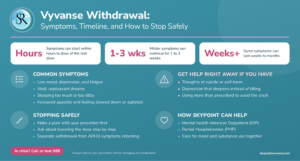
Vyvanse withdrawal can happen when you stop or cut back on Vyvanse (lisdexamfetamine) after taking it for a while. You might feel tired, down, and hungrier than usual, sleep more or less than normal, and have vivid, unpleasant dreams. It usually isn’t physically dangerous, but the low mood can hit hard, and it’s easy to mistake for your ADHD coming back. Below, we’ll cover what to expect, how long it lasts, and how to stop safely.
Why Vyvanse Withdrawal Happens
Vyvanse is a prodrug. Your body converts it into dextroamphetamine, a stimulant that raises dopamine and norepinephrine in the brain. That boost helps with focus in ADHD and with binge eating disorder, the two conditions it’s approved to treat. With daily use, your brain adapts to having that extra stimulation. When it’s taken away, your energy, mood, and motivation can dip below your normal baseline for a while.
The 2026 Vyvanse prescribing information is clear that the drug carries a high potential for misuse, which can lead to a substance use disorder. It can also cause physical dependence with repeated use, which is why stopping or cutting back can bring on withdrawal.
Vyvanse Withdrawal Symptoms
Withdrawal signs after stopping or lowering the dose following long-term use include:
- Low mood (dysphoria) and depression
- Fatigue
- Vivid, unpleasant dreams
- Sleeping much more than usual, or not being able to sleep
- Increased appetite
- Feeling slowed down, or feeling agitated
Anxiety and trouble concentrating can show up too.
When to get help right away
Call or text 988 if you have thoughts of suicide or self-harm. Reach out to your prescriber or a treatment team if your mood keeps sinking instead of lifting, or if you find yourself taking extra doses to avoid the crash.
How Long Does Vyvanse Withdrawal Last?
Vyvanse turns into dextroamphetamine, which has a half-life of about 10 to 11 hours in healthy adults, so the amount in your body drops steadily once you stop. From there, according to SAMHSA’s guide to treating stimulant use disorders, stimulant withdrawal generally follows this pattern:
- Within hours to days: symptoms usually begin after prolonged, heavy use stops.
- The first several days: the most severe symptoms tend to hit, then start to ease.
- One to three weeks: milder symptoms, such as fatigue, low mood, anxiety, and trouble concentrating, can hang on.
For some people, depression, anxiety, and sleep problems last weeks to months. Withdrawal usually develops after prolonged, heavy use, so the dose you took and how long you took it both shape what you feel.
Is It Withdrawal or Your ADHD Coming Back?
Some of what you feel after stopping is withdrawal. Some of it is the condition Vyvanse was treating. Knowing which is which helps you and your prescriber decide what to do next.
| Usually withdrawal | Usually ADHD returning |
| Heavy fatigue and sleeping far more than usual | Trouble focusing that was there before you started Vyvanse |
| Low mood, flatness, vivid dreams | Restlessness and impulsivity at your old baseline |
| Big appetite changes | Symptoms that stay steady rather than fading |
| Tends to ease over days to weeks | Doesn’t improve with time off the medication |
If you took Vyvanse for binge eating disorder, returning urges to binge can feel like withdrawal too. Tell your prescriber so they can plan for it.
How to Stop Vyvanse Safely
The safest way to stop is with a plan made alongside your prescriber:
- Don’t stop on your own if you’ve taken high doses or used it for a long time. Ask whether stepping the dose down makes sense for you.
- Plan for the first week. Clear your schedule where you can, and expect to need more sleep.
- Keep meals regular, since appetite often jumps.
- Track your mood daily so you can spot depression that’s getting worse.
- Have a plan for your ADHD or binge eating symptoms, whether that’s another treatment, therapy, or practical supports.
If you’ve been misusing Vyvanse
Taking more than prescribed, crushing capsules, or using someone else’s prescription changes the picture. At that point, stopping means treating a stimulant use disorder as well as ending a medication. Therapy and structured support help most in the weeks after the crash, when cravings and low mood can hang on.
How Skypoint Recovery Helps
At Skypoint Recovery in Akron, our mental health Intensive Outpatient Program offers morning or evening sessions three to five days a week, so you can get support for your mental health while you keep up with daily responsibilities like work or school. If you need more support day to day, our partial hospitalization program offers a higher level of care. When stimulant misuse and mental health struggles show up together, our dual diagnosis care treats both.
Still weighing whether Vyvanse is right for you? Our guides to Vyvanse side effects and Vyvanse vs. Adderall cover what to know. When you’re ready to talk, contact our team for a confidential conversation.
Frequently Asked Questions
1. How long does Vyvanse withdrawal last?
Symptoms usually begin within hours to days of stopping, and the most severe ones tend to ease after several days. Milder symptoms can last one to three weeks, and for some people, depression, anxiety, or sleep problems last weeks to months.
2. What does Vyvanse withdrawal feel like?
Most people feel tired, flat, and unmotivated. Sleep changes, vivid dreams, a bigger appetite, and low mood are common.
3. Can you stop Vyvanse cold turkey?
Decide that with your prescriber. After high doses, long-term use, or misuse, a planned approach is safer because of the risk of depression.
4. Is Vyvanse withdrawal dangerous?
It usually isn’t physically dangerous. The main risk is depression, so get help right away if you have thoughts of suicide.
Related Blogs
-
 Vyvanse Withdrawal: Symptoms, How Long It Lasts, and How to Stop Safely
-
Cocaine Withdrawal: Symptoms, Timeline, and How to Get Through the Crash
-
Xanax Withdrawal Symptoms: Timeline, Dangers, and Why Medical Detox Matters
-
AA vs. NA: Which 12-Step Program Is Right for You?
-
What Actually Happens During Medical Detox? A Day-by-Day Guide
-
Signs You Might Need Dual Diagnosis Treatment



Freedom Is Just a Call Away
Skypoint Recovery offers personalized treatment programs led by experienced professionals who understand your journey. We’ll help you build the foundation for lasting recovery through evidence-based care tailored to your needs. Your path to healing awaits – reach out for a confidential consultation.
 Call Us Now

 Trusted Partners