
Methadone withdrawal symptoms can start when you lower your dose or stop after taking it regularly. It often feels like a bad flu: aches, restlessness, sweating, an upset stomach, and poor sleep. Because methadone stays in your body a long time, symptoms build more slowly than with heroin or fentanyl, and they can last longer. The biggest risk comes afterward: once your tolerance drops, going back to opioids can cause an overdose. Below, we’ll cover what to expect, how a safe taper works, and how to protect yourself.
Why Methadone Withdrawal Is Different
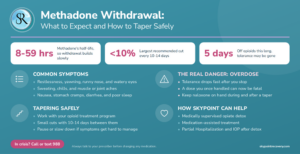
Methadone is a long-acting opioid. It’s used to treat opioid use disorder, and sometimes for pain. The FDA label for Dolophine (methadone) puts its elimination half-life at 8 to 59 hours. That long, steady presence is what makes it useful in treatment. It also shapes withdrawal.
Because methadone stays in your body so long, withdrawal usually starts later and lasts longer than heroin withdrawal. According to MedlinePlus, symptoms usually begin within 12 hours of the last heroin use but within 30 hours of the last methadone dose. Here’s a general comparison:
| Heroin | Methadone | |
| When withdrawal usually starts | Within 12 hours of the last use | Within 30 hours of the last dose |
| How long it lasts | Usually eases within 3 to 5 days | Peaks around day 3, then fades gradually over 3 weeks or longer |
Common Methadone Withdrawal Symptoms
Common withdrawal symptoms include:
- Restlessness and yawning
- Watery eyes and runny nose
- Sweating and chills
- Muscle aches and enlarged pupils
Other symptoms can develop too:
- Irritability and anxiety
- Back pain, joint pain, and weakness
- Stomach cramps, nausea, vomiting, and diarrhea
- Poor appetite and trouble sleeping
- Higher blood pressure, faster breathing, and a faster heart rate
Opioid withdrawal can be very uncomfortable, but it is not life-threatening on its own. It still carries real risks, though, including dehydration from vomiting and diarrhea, and what happens if you return to opioids.
The Real Danger: Losing Your Tolerance
Withdrawal fades, but your tolerance fades with it. Anyone who hasn’t taken opioids for more than 5 days may no longer be tolerant. After a taper or an abrupt stop, a dose you used to handle can slow your breathing enough to kill you.
The risk of relapse after stopping methadone maintenance is also high. And with fentanyl so common in the drug supply, a relapse can be especially dangerous. In Ohio, methadone was involved in 110 unintentional overdose deaths in 2023, while fentanyl and its analogs were involved in 78% of all overdose deaths in the state, according to the Ohio Department of Health’s 2023 overdose report.
If you’re tapering, or you’ve recently stopped:
- Keep naloxone (Narcan) where you and the people around you can reach it. It’s worth talking about naloxone access with your prescriber whenever methadone is started or renewed.
- Tell someone you trust that your tolerance is lower now.
- Have a plan for cravings before they hit.
How to Taper Off Methadone Safely
Stopping methadone suddenly is not recommended. For people on methadone maintenance, the recommended pace is specific: dose reductions should generally be less than 10% of the maintenance dose, with 10 to 14 days between each reduction.
At that pace, a full taper usually takes months. A safe taper:
- Is planned with your opioid treatment program (OTP), where methadone for opioid use disorder is dispensed
- Moves in small steps, with room to pause or slow down if symptoms get hard to manage
- Comes with counseling and a relapse-prevention plan
- Answers the question “Is now the right time?” first. Stopping maintenance carries a high risk of relapse, so that’s a decision to make with your provider.
When to Get Extra Support
Consider more support than your usual clinic visits if:
- You’ve tried to taper before and relapsed
- You’re thinking about stopping on your own
- You also use alcohol, benzodiazepines, or stimulants
- You’re dealing with depression, anxiety, or trauma alongside opioid use
How Skypoint Recovery Helps
At Skypoint Recovery in Akron, our medically supervised opiate detox helps you manage withdrawal safely, and our detox services include medication-assisted treatment. After detox, our PHP in Akron and intensive outpatient program keep structure and support in place as you settle into recovery. Learn more about how medication-assisted treatment fits into recovery.
If you’re thinking about coming off methadone, you don’t have to plan it alone. Talk with our team about your options confidentially.
Frequently Asked Questions
1. How long does methadone withdrawal last?
It usually lasts longer than heroin withdrawal. Methadone withdrawal can fade gradually over 3 weeks or longer, while heroin withdrawal tends to ease within a few days.
2. When does methadone withdrawal start?
Later than with heroin. Symptoms usually start within about 30 hours of the last methadone dose, compared with about 12 hours for heroin.
3. Can methadone withdrawal kill you?
Opioid withdrawal is not life-threatening by itself, though vomiting and diarrhea can cause dehydration. The bigger risk is overdose if you use opioids again after your tolerance drops.
4. How fast can you taper off methadone?
The recommended pace is dose reductions of generally less than 10%, with 10 to 14 days between each one. Your opioid treatment program can adjust the pace to how you’re doing.
Related Blogs
-
 Methadone Withdrawal Symptoms: What to Expect and How to Taper Safely
-
Vyvanse Withdrawal: Symptoms, How Long It Lasts, and How to Stop Safely
-
Cocaine Withdrawal: Symptoms, Timeline, and How to Get Through the Crash
-
Xanax Withdrawal Symptoms: Timeline, Dangers, and Why Medical Detox Matters
-
AA vs. NA: Which 12-Step Program Is Right for You?
-
What Actually Happens During Medical Detox? A Day-by-Day Guide



Freedom Is Just a Call Away
Skypoint Recovery offers personalized treatment programs led by experienced professionals who understand your journey. We’ll help you build the foundation for lasting recovery through evidence-based care tailored to your needs. Your path to healing awaits – reach out for a confidential consultation.
 Call Us Now

 Trusted Partners