
If you’re thinking about how to stop drinking, you’ve already taken a hard first step, and you don’t have to figure out the rest on your own. If you drink heavily every day, please talk to a doctor before you stop. Quitting suddenly can cause dangerous withdrawal. After that, it comes down to a plan you can stick with and the right support around you. Below, we’ll cover whether to cut back or quit, a step-by-step plan, and the withdrawal signs that need medical help.
Should You Cut Back or Quit Drinking?
Cutting back on alcohol can be a reasonable goal for some people. For others, quitting is the safer choice. The National Institute on Alcohol Abuse and Alcoholism’s Rethinking Drinking guide strongly advises quitting if any of these apply to you:
- You’ve tried to cut down but couldn’t stay within the limits you set.
- You’ve had alcohol use disorder (AUD) or have any of its symptoms now.
- You have a physical or mental health condition that drinking causes or makes worse.
- You take a medication that interacts with alcohol.
- You’re pregnant or might be.
If none of those fit, talk with your doctor about which goal makes sense. Things like your age, family history, and past drinking-related injuries all matter.
Not sure whether your drinking counts as a disorder? Our guide to the difference between problem drinking and alcohol use disorder walks through the 11 symptoms doctors look for.
| Your situation | Better starting goal |
|---|---|
| You drink a few times a week and have no AUD symptoms | Cutting back may work; set limits and track them |
| You’ve tried to cut back and kept going over your limit | Quit, with support |
| You drink heavily every day or feel shaky when you stop | Quit, but only with medical advice first |
| You’re pregnant, or drinking worsens a health problem | Quit |
Why Quitting Alone Is So Hard
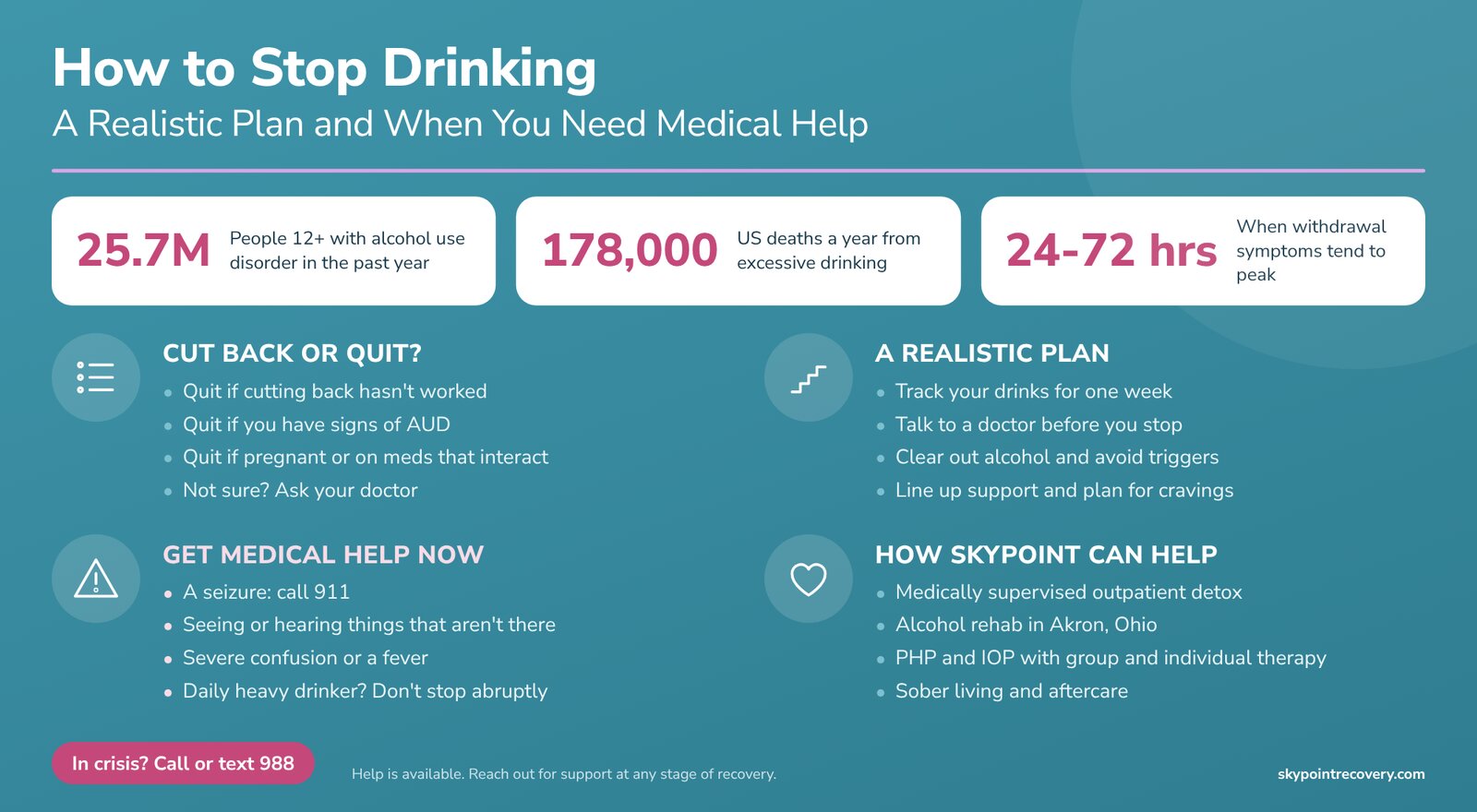
If you’ve tried to stop drinking on your own and kept ending up back where you started, you have a lot of company. According to the 2025 National Survey on Drug Use and Health from SAMHSA, 25.7 million people ages 12 and older had alcohol use disorder in the past year. Yet only about 1 in 6 people who needed substance use treatment got it.
Excessive drinking causes about 178,000 deaths in the United States each year, according to the CDC.
A lot of people who reach out to Skypoint Recovery say the same thing: they tried to quit by themselves more than once and couldn’t make it stick. Willpower alone often falls short, because AUD changes how your brain handles cravings and stress. A clear plan and support from other people make it more likely to stick.
How to Stop Drinking: A Step-by-Step Plan
- Track what you drink for one week. Write down every drink before you have it. Measure your pours at home so you know what a standard drink looks like.
- Talk to a doctor before you stop if you drink heavily. If you drink every day, or you’ve felt shaky, sweaty, or anxious when you skip a day, get medical advice before you quit. A doctor can tell you whether you need supervised detox.
- Pick a quit date or set clear limits. If you’re quitting, choose a date in the next week or two. If you’re cutting back, decide how many days you’ll drink and how many drinks you’ll have, and include alcohol-free days.
- Clear alcohol out and avoid your triggers. Keep little or no alcohol at home. Notice the people, places, times, and feelings that make you want to drink, and plan around them.
- Plan for cravings before they hit. Remind yourself why you’re quitting, call someone you trust, or get busy with something else until the urge passes. Cravings usually fade if you wait them out.
- Have your “no” ready. Decide ahead of time what you’ll say when someone offers you a drink. A quick, polite answer makes it easier to stick with it.
- Line up support. Tell a friend or family member your plan. Look into support groups like AA, and ask your doctor about counseling.
- Ask about medication. Several FDA-approved medications can cut cravings or help you stay sober. Our post on the facts about alcohol medications explains how each one works.
Alcohol Withdrawal: Signs You Need Medical Help
If your body has gotten used to alcohol, stopping suddenly can trigger withdrawal. Symptoms often start within about 8 hours of your last drink, though they can show up days later. They tend to peak between 24 and 72 hours, and some can last for weeks.
Some withdrawal symptoms are an emergency, so it helps to know the signs ahead of time.
| Symptom | What it means |
|---|---|
| Shakiness, sweating, nausea, trouble sleeping | Common withdrawal; call a doctor for advice |
| Anxiety, restlessness, a racing heart | Common withdrawal; call a doctor, especially if it’s getting worse |
| A seizure | Emergency; call 911 |
| Seeing, hearing or feeling things that aren’t there | Emergency; get medical help right away |
| Severe confusion or a fever | Possible delirium tremens (DTs); call 911 |
If you drink heavily every day, don’t stop abruptly without talking to a medical provider first. A medical provider can look at your drinking and health history and tell you which level of care is right for you, from outpatient detox like the program at Skypoint Recovery to hospital care.
If you’re in crisis or thinking about hurting yourself, call or text 988 any time.
Support Options That Fit Different Needs
Detox handles withdrawal. What keeps you sober is what comes after it. Here’s how the main options compare.
| Option | What it gives you | Good fit if |
|---|---|---|
| Your doctor | Screening, medication, referrals | You’re just starting to look at your drinking |
| Support groups like AA | Free peer support and regular meetings | You want people around you who get it |
| Outpatient counseling or IOP | Therapy a few days a week around work or family | You’re stable and can stay sober between sessions |
| Partial hospitalization (PHP) | Several hours of therapy most days, home at night | You need daily structure after detox |
| Medically supervised detox | Medical care through withdrawal | You drink heavily and get symptoms when you stop |
How Skypoint Recovery Helps
Skypoint Recovery in Akron, Ohio, helps you quit drinking safely and then stay on track once the hardest days are behind you.
- Medically supervised outpatient detox. Our medical team keeps you safe and comfortable through withdrawal.
- Alcohol rehab. Skypoint’s alcohol rehab in Akron offers group and individual therapy, life skills training, and treatment for co-occurring anxiety, depression, and trauma.
- PHP and IOP. You can step from several hours of therapy most days down to a flexible morning or evening schedule as you get stronger.
- Sober living and aftercare. Our sober living homes and aftercare options, including AA and relapse prevention, keep you connected after treatment ends.
You don’t have to figure this out by yourself. Talk with someone at Skypoint about where you are with drinking, and we’ll help you choose a safe first step.
Frequently Asked Questions
Is it safe to stop drinking cold turkey?
It depends on how much and how often you drink. If you drink heavily every day, stopping suddenly can cause dangerous withdrawal, including seizures. Talk to a doctor first so you can quit with the right support.
How long does alcohol withdrawal last?
Symptoms often start within about 8 hours of your last drink and tend to peak between 24 and 72 hours. Some symptoms can go on for weeks, and sleep problems, mood swings, and fatigue can last for months.
Can you stop drinking on your own?
Some people can, especially if they drink lightly and have no withdrawal symptoms. Many people with alcohol use disorder find it much harder alone. Support groups, counseling, and treatment programs make it more likely you’ll stay sober.
What is the best way to stop drinking if you drink every day?
Start with a doctor’s visit before you stop, so withdrawal can be managed safely. From there, a detox program followed by structured treatment gives you the most support. For daily drinkers, that’s the safest answer to how to stop drinking.
Related Blogs
-
 How to Stop Drinking: A Realistic Plan and When You Need Medical Help
-
How Long Is PHP Treatment? Typical Length and What Comes After
-
Weed Withdrawal Symptoms: What to Expect, How Long It Lasts, and When to Get Help
-
Methadone Withdrawal Symptoms: What to Expect and How to Taper Safely
-
Vyvanse Withdrawal: Symptoms, How Long It Lasts, and How to Stop Safely
-
Cocaine Withdrawal: Symptoms, Timeline, and How to Get Through the Crash



Freedom Is Just a Call Away
Skypoint Recovery offers personalized treatment programs led by experienced professionals who understand your journey. We’ll help you build the foundation for lasting recovery through evidence-based care tailored to your needs. Your path to healing awaits – reach out for a confidential consultation.
 Call Us Now

 Trusted Partners