
Weed withdrawal symptoms can show up as a short temper, a restless, anxious feeling and trouble sleeping, usually a day or two after you stop. It’s most common in people who’ve been using every day or close to it. For most, the first week is the hardest. It usually isn’t dangerous, but the bad sleep and low mood are a big reason people go back to using. Below, we’ll cover what to expect, how long it lasts, and when to get support.
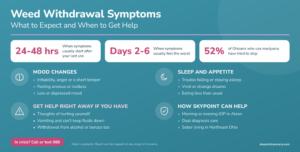
Common weed withdrawal symptoms
If you’ve been using for a while, your brain has gotten used to having THC around. When it’s suddenly gone, your mood, sleep and appetite take a little time to settle back down. The National Institute on Drug Abuse lists these as the most common symptoms:
- Irritability, anger or a short temper
- Feeling nervous, anxious or restless
- Low or depressed mood
- Trouble falling asleep or staying asleep
- Strange, vivid or unsettling dreams
- Eating less than usual, sometimes with weight loss
- Headaches, sweating, stomach pain or shakiness
Cravings come along with most of these. You might notice them most at the times of day you used to smoke, vape or take an edible.
You don’t need to have every symptom for it to count as withdrawal. Some people mostly struggle with sleep and mood. Others notice the irritability first, usually because the people around them point it out.
Weed withdrawal timeline: how long does it last?
Symptoms usually start within 24 to 48 hours after your last use and peak somewhere between days 2 and 6. For most people, the worst of it eases within about two weeks. If you were a heavy user, sleep trouble and some mood symptoms can hang on for three weeks or longer.
| When | What’s common | What helps most |
| Days 1 to 2 | Irritability, cravings, trouble falling asleep | Clear out your supply and plan your evenings |
| Days 2 to 6 (peak) | Poor sleep, vivid dreams, anxiety, low appetite, headaches | Regular meals, a set bedtime, someone to check in with |
| Week 2 | Most symptoms fade, cravings come and go | Keep the new routine going, avoid old triggers |
| Week 3 and beyond | Sleep and mood can still be off for heavy users | Talk to a professional if it isn’t improving |
Several things can make withdrawal stronger or longer:
- How much and how often you used. Daily use and larger amounts usually mean a harder first week.
- How strong your products were. THC levels in illegal cannabis seized by law enforcement roughly quadrupled between 1995 and 2022, and some dispensary flower and concentrates top 40% THC.
- Other substances. People who also smoke cigarettes or use other drugs tend to have a rougher time.
- Your mental health. If you were using weed to manage anxiety, depression or sleep problems, those can come back when you stop.
Is it weed withdrawal or something else?
Not every symptom after quitting is withdrawal. This table can help you sort out what you’re feeling and what to do next.
| What you notice | What it might be | What to do |
| Irritability, poor sleep and low appetite that start 1 to 2 days after stopping and fade over 1 to 2 weeks | Weed withdrawal | Ride it out with a plan, and get support if you keep going back |
| Repeated nausea, vomiting and belly pain while you’re still using heavily, often eased by hot showers | Cannabinoid hyperemesis syndrome (CHS) | See a doctor, and get care right away if you can’t keep fluids down |
| Anxiety, depression or insomnia that was there before you started, or that gets worse after a few weeks | An underlying mental health condition | Get an assessment so both issues can be treated together |
That last row is more common than people expect. If it sounds like you, take a look at these signs you might need dual diagnosis treatment. At Skypoint Recovery Ohio, our team treats substance use and mental health at the same time, so you don’t have to figure out which one came first before getting help.
What weed use looks like in Ohio right now
Since Ohio voters legalized adult-use cannabis in 2023, more Ohioans are using it, and many of them are trying to cut back. In a statewide poll of 2,000 Ohio adults from the OneOhio Recovery Foundation, taken in early 2026:
- 41% of Ohio adults said they currently use marijuana in some form.
- 47% of people who use said they use at least once a day.
- 52% of current users said they had tried to stop.
So if you’ve tried to quit and ended up back where you started, you’re in very common company. Nationally, the 2025 National Survey on Drug Use and Health found that 19.3 million people aged 12 or older had a marijuana use disorder, the most common drug use disorder in the country. Withdrawal is one of the signs of that disorder, and it’s often the part that makes quitting on your own so hard.
How to get through weed withdrawal
There’s no FDA-approved medication for cannabis withdrawal, so getting through it comes down to planning, support and taking care of the basics. These steps help most people:
- Pick your approach. Some people step down over a week or two. Others find a clean stop easier. Either can work, as long as you have a plan for days 2 to 6.
- Clear out your supply. That includes vapes, edibles and anything stashed in the car.
- Protect your sleep. Keep the same bedtime, cut caffeine after noon and put your phone away before bed. Expect vivid dreams for a while.
- Eat even if you’re not hungry. Small, regular meals and plenty of water help with mood and headaches.
- Move your body. A walk, a workout or time outside can take the edge off restlessness.
- Change the routines tied to using. Learning your internal and external triggers makes the hardest moments easier to see coming.
- Tell someone. A friend, family member, sponsor or support group can check in on the tough days.
Try not to swap weed for alcohol or sleeping pills to get through it. That can trade one problem for another.
When weed withdrawal means it’s time for more support
Withdrawal from weed alone usually isn’t medically dangerous. Still, it’s worth talking to a professional if:
- You’ve tried to quit several times and gone back within days.
- You were using weed to cope with anxiety, depression, trauma or sleep problems, and those are coming back strong.
- Your mood is getting worse instead of better after the first couple of weeks.
- You’re also drinking or using pills like benzodiazepines. Stopping those can be dangerous, and we can help you arrange medically supervised detox through one of our partner facilities.
- Weed is causing problems at work, at home or in your relationships.
If you’re having thoughts of hurting yourself, call or text 988 to reach the Suicide & Crisis Lifeline right away. It’s free and open 24/7.
Behavioral therapies such as cognitive behavioral therapy (CBT) and motivational enhancement therapy can be effective for cannabis use disorder. They teach you how to handle cravings, stress and the situations that used to lead to using.
How Skypoint Recovery Ohio helps
At our Akron treatment center, we work with people from across Northeast Ohio who are ready to cut back or stop using cannabis and want real support while they do it.
- Intensive outpatient treatment. Our intensive outpatient program with morning or evening sessions meets for several hours, three to five days a week. You’ll work through group and individual therapy, including CBT, and keep up with work and family.
- More structure when you need it. In our partial hospitalization program (PHP), you attend up to six hours of therapy most days and go home or to sober living at night.
- Dual diagnosis care. If anxiety, depression or trauma is part of the picture, we treat it alongside your cannabis use.
- Sober living. Our sober living homes throughout Northeast Ohio give you a peer-led, substance-free place to live while you’re in treatment.
Skypoint accepts Medicaid, and our team can check your coverage before you commit to anything. The first step is just a conversation about what’s going on. After that, we’ll do an assessment and build a plan around your needs. Not sure where to start? Call 330-919-6864 or send our team a confidential message, and we’ll get back to you.
Frequently asked questions
1. How long does weed withdrawal last?
Most symptoms start within a day or two, peak around days 2 to 6, and ease within about two weeks. If you used heavily for a long time, sleep problems and mood changes can last three weeks or more. If you’re still struggling after a month, it’s a good idea to talk with a professional.
2. Can weed withdrawal cause nausea or headaches?
Yes. Headaches, stomach pain, sweating and shakiness are all possible, though mood and sleep symptoms are more common. Repeated vomiting while you’re still using heavily may be cannabinoid hyperemesis syndrome instead, which needs medical care.
3. Is weed withdrawal dangerous?
For most people it’s uncomfortable but not dangerous. The bigger risks are going back to using, or swapping in alcohol or pills to cope. Get help right away if you have thoughts of hurting yourself or you’re also withdrawing from alcohol or benzodiazepines.
4. Does Medicaid cover treatment for marijuana use in Ohio?
Skypoint Recovery Ohio accepts Medicaid. When you call 330-919-6864, our admissions team can check your coverage and talk through which level of care fits, from IOP to PHP and sober living.
When you’re ready, we’re here. You don’t have to wait until things fall apart, and you don’t have to quit on your own. Call our Akron team at 330-919-6864 any time for a free, confidential conversation about what you’re going through, or email admissions@skypointrecovery.com. Your Journey, Our Commitment.
Related Blogs
-
 Weed Withdrawal Symptoms: What to Expect, How Long It Lasts, and When to Get Help
-
Methadone Withdrawal Symptoms: What to Expect and How to Taper Safely
-
Vyvanse Withdrawal: Symptoms, How Long It Lasts, and How to Stop Safely
-
Cocaine Withdrawal: Symptoms, Timeline, and How to Get Through the Crash
-
Xanax Withdrawal Symptoms: Timeline, Dangers, and Why Medical Detox Matters
-
AA vs. NA: Which 12-Step Program Is Right for You?



Freedom Is Just a Call Away
Skypoint Recovery offers personalized treatment programs led by experienced professionals who understand your journey. We’ll help you build the foundation for lasting recovery through evidence-based care tailored to your needs. Your path to healing awaits – reach out for a confidential consultation.
 Call Us Now

 Trusted Partners