
Finishing detox is a big deal, and a lot of people aren’t sure what comes next. For most, the next step is a treatment program like PHP or IOP. Detox gets you safely through withdrawal, but treatment is where you work on cravings, triggers and what led to using in the first place. That next step is what helps you stay sober once you’re back home. Below, we’ll cover what happens after detox, why skipping the next step is risky, and how to get through your first week.
Why Detox Alone Isn’t Enough
Detox treats the physical side of addiction. Over several days, your body clears the substance and settles down from withdrawal, with medical care to keep you safe. That’s a big step. Still, it leaves the habits, stress, and mental health struggles that drove your use mostly untouched.
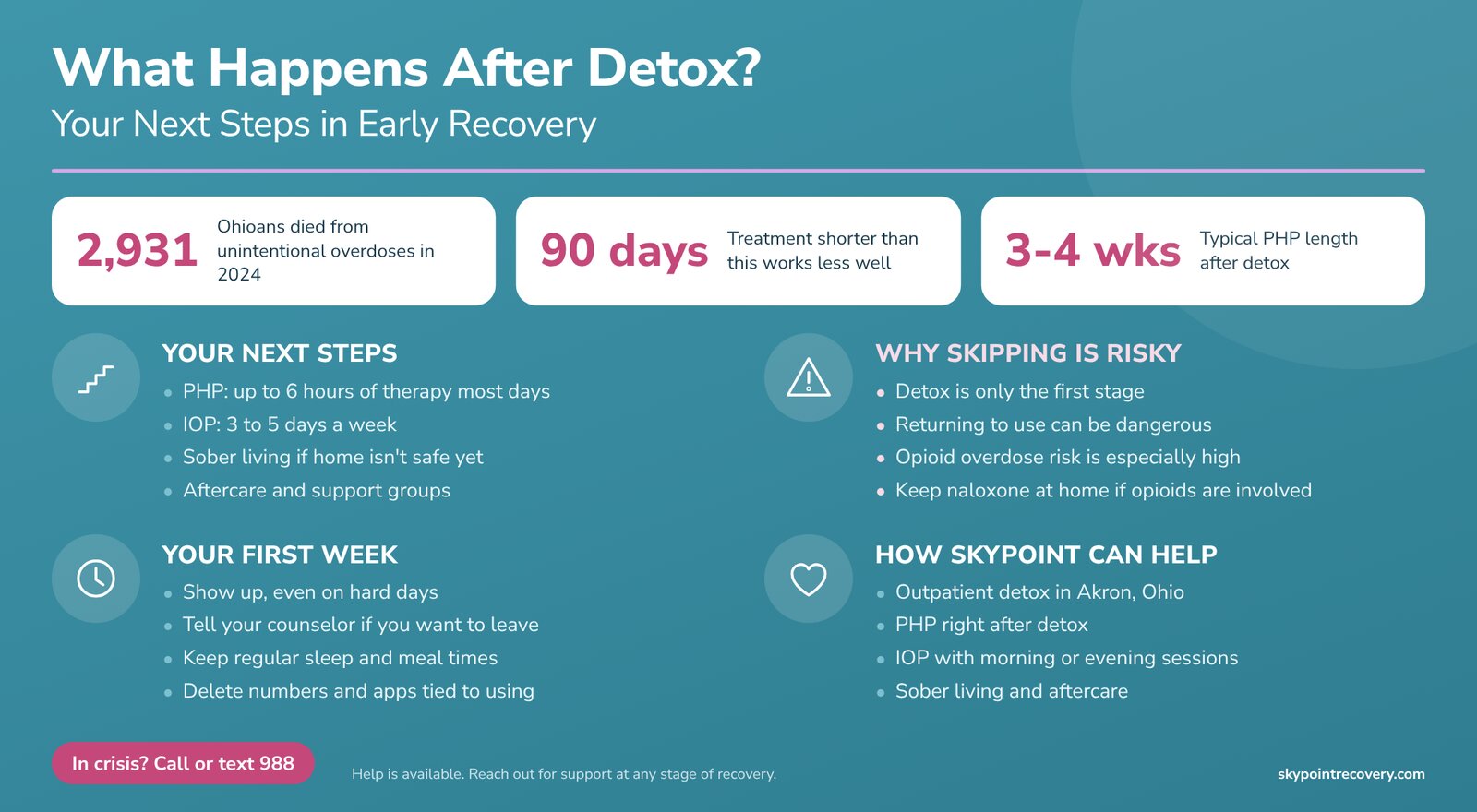
The National Institute on Drug Abuse’s Principles of Drug Addiction Treatment puts it plainly: medically assisted detox is only the first stage of treatment, and on its own it rarely leads to long-term sobriety. The same guide says treatment lasting less than 90 days has limited effectiveness. A few days of detox gets you to the starting line. The next few months are where recovery takes hold.
If you’re weighing whether you need both, our guide on how detox and rehab differ and why most people need both breaks it down.
The Overdose Risk After Detox
This part of early recovery doesn’t get talked about enough. Returning to use after detox can be dangerous, and that risk is easy to underestimate when you start to feel better.
For opioids, the danger is especially high. The CDC’s guidance on treating opioid use disorder says detox on its own, without medication for opioid use disorder, isn’t recommended because it raises the risk of returning to use, overdose, and overdose death.
Ohio’s numbers show why. According to the Ohio Department of Health, 2,931 Ohioans died from unintentional drug overdoses in 2024. That’s a 34% drop from 2023, which is good news, but it’s still thousands of families.
A few ways to protect yourself:
- Go from detox straight into treatment. The days right after detox are when cravings and old routines are strongest.
- Ask a medical provider about medication. For opioid or alcohol use disorder, medication can lower cravings and your risk of relapse.
- Keep naloxone at home if opioids are involved. Naloxone can reverse an opioid overdose, and the people you live with should know where it is.
What Happens After Detox: Your Next Steps
Most people step down through a few levels of care, moving to less structure as they get stronger. Here’s what that usually looks like at Skypoint Recovery.
| Step | Typical length | What happens |
|---|---|---|
| Outpatient detox | Until withdrawal is stable | Medically supervised care through withdrawal while you live at home |
| PHP | 3 to 4 weeks | Up to 6 hours of therapy most days of the week. You live at home or in sober living. |
| IOP | Around 10 weeks | Several hours of therapy, 3 to 5 days a week, morning or evening. You live at home or in sober living. |
| Sober living | Often a month or two, sometimes up to a year | A shared, sober house with peers, chores and job placement |
| Aftercare | Ongoing | Support groups, 12-step programs and life skills work while you live at home |
- Partial hospitalization (PHP). This is a common next step after detox. You spend most of your day in group therapy, individual therapy, and relapse prevention, then go home at night.
- Intensive outpatient (IOP). Once you’re steadier, you drop to a few days a week. You can work, go to school, or care for your family while you keep building skills.
- Sober living. If home isn’t a safe place to stay sober yet, a sober living house gives you structure and peers who are working on the same thing.
- Aftercare. Groups like AA and NA, life skills training, and ongoing support keep you connected after formal treatment ends.
Not everyone needs every step. Your team will look at your history, your home life, and how you’re doing to decide where you start and when you move on.
Feeling Like You Want to Leave Is Normal
A lot of people come into treatment right after detox feeling skeptical. You might not feel ready to open up. You might even want to walk out on day two. That’s common. Your body is still recovering, your sleep may be off, and your emotions can swing hard in the first days without substances.
What tends to help is structure. A set schedule, the same faces in group each day, and a counselor who knows your story give you something steady to hold on to while the fog lifts.
If you feel the urge to leave, say it out loud to your counselor. Saying it often takes away some of its power, and your team can adjust your plan.
Your First Week After Detox: A Checklist
Use this list to get through the first seven days:
- Show up every day, even when you don’t feel like it.
- Tell your counselor when you want to leave or feel a strong craving.
- Go to bed and eat meals at about the same times each day.
- Delete phone numbers and apps tied to using.
- Remove alcohol, drugs, and paraphernalia from your home, or ask someone to do it for you.
- Write down two or three people you can call when a craving hits.
- Keep naloxone at home if you’ve used opioids.
- Call or text 988 any time if you feel hopeless or think about hurting yourself.
| What you notice | What to do |
|---|---|
| Strong cravings that won’t let up | Tell your counselor today; ask about medication |
| Thinking about skipping sessions | Talk with your team before you miss one |
| Spending time with people you used with | Bring it up in group or individual therapy |
| Trouble sleeping or feeling very low | Let your treatment team or a medical provider know |
| A slip or return to use | Tell your team right away so they can adjust your plan |
How Skypoint Recovery Helps
At Skypoint Recovery in Akron, Ohio, we plan for what happens after detox from the first day, so you aren’t left on your own when withdrawal ends.
- Outpatient detox. Our outpatient detox in Akron is medically supervised and uses medication-assisted treatment to guide you through withdrawal. The goal is individualized treatment from the start of your detox to your transition back to daily life.
- PHP after detox. Our structured partial hospitalization treatment gives you up to 6 hours of therapy most days, usually for 3 to 4 weeks, including group therapy, CBT, relapse prevention, and treatment for co-occurring mental health conditions.
- IOP. When you’re ready, you can step down to a morning or evening schedule 3 to 5 days a week.
- Sober living and aftercare. Our sober living homes, job placement program, and aftercare options like AA, NA, and life skills training help you build a life in recovery.
If you or someone you love is finishing detox or about to start, ask us about your next step. We’ll help you figure out where to start and what the plan looks like.
Frequently Asked Questions
Do I need rehab after detox?
Most people do. Detox handles withdrawal, but it doesn’t treat the thoughts, habits, and stress behind substance use. A program like PHP or IOP gives you the tools to stay sober once you’re home.
What should I do right after detox?
Move into the next level of care as soon as you can, ideally the same day or the next. Ask about medication if you’ve used opioids or alcohol. Remove substances from your home and line up people you can call.
Is relapse common after detox?
Yes, relapse is common, especially without follow-up treatment. If you slip, tell your team right away so they can adjust your plan. Many people have setbacks and still go on to a solid recovery.
What happens after detox if you don’t go to treatment?
Without treatment, you go back to the same stress and triggers with no new tools for handling them. That raises your risk of returning to use, and for opioids, the risk of overdose. Stepping into PHP or IOP is the safer path after detox.
Related Blogs
-
 What Happens After Detox? Your Next Steps in Early Recovery
-
How to Stop Drinking: A Realistic Plan and When You Need Medical Help
-
How Long Is PHP Treatment? Typical Length and What Comes After
-
Weed Withdrawal Symptoms: What to Expect, How Long It Lasts, and When to Get Help
-
Methadone Withdrawal Symptoms: What to Expect and How to Taper Safely
-
Vyvanse Withdrawal: Symptoms, How Long It Lasts, and How to Stop Safely



Freedom Is Just a Call Away
Skypoint Recovery offers personalized treatment programs led by experienced professionals who understand your journey. We’ll help you build the foundation for lasting recovery through evidence-based care tailored to your needs. Your path to healing awaits – reach out for a confidential consultation.
 Call Us Now

 Trusted Partners